Indoor Air Quality Testing in League City, Texas
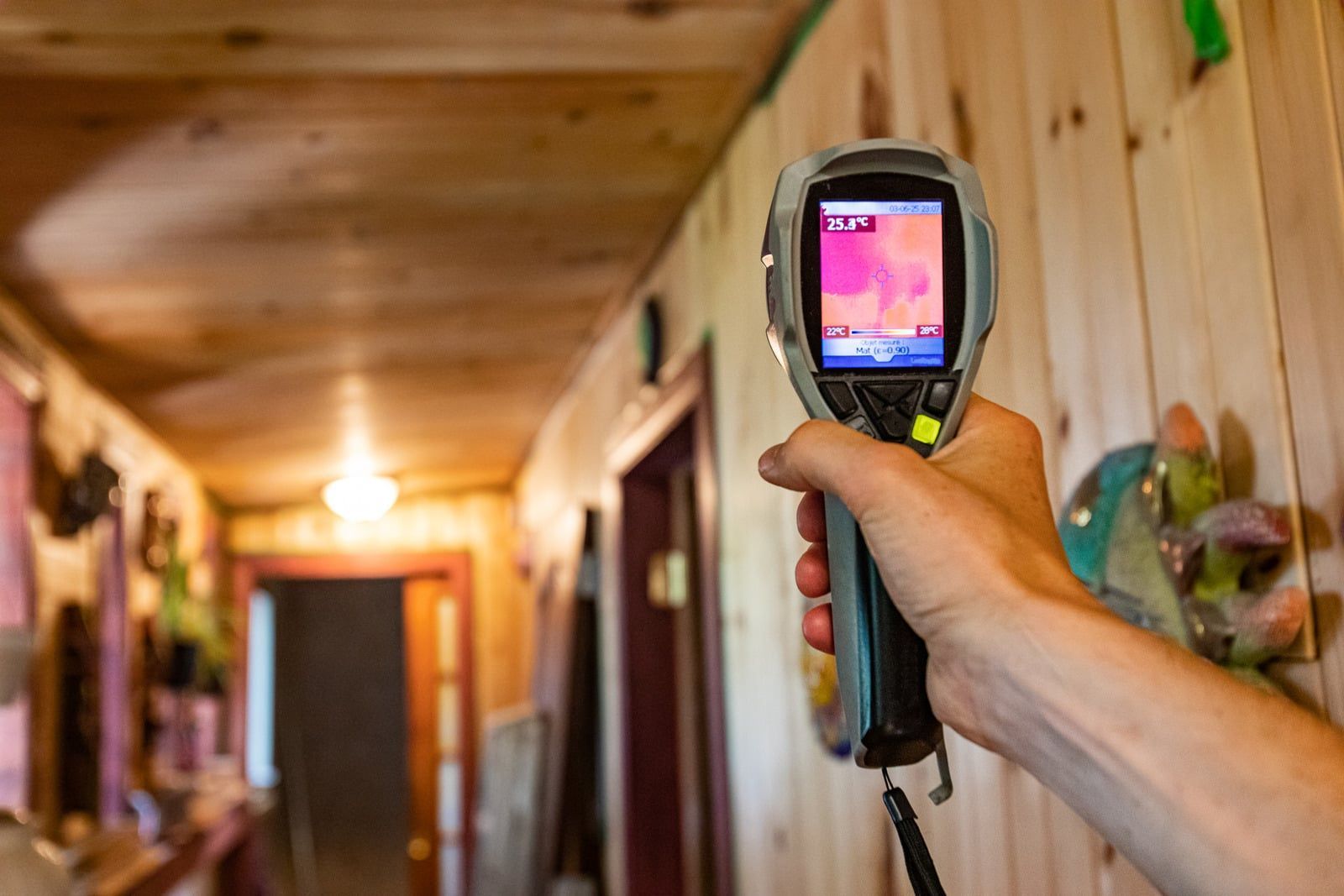
Clearer Air Begins With Professional Indoor Testing
Indoor air concerns should not be ignored. Musty odors, elevated humidity, past or recent water intrusion, visible staining, or allergy-like symptoms may point to conditions that need further evaluation.
Turn Key Home Inspection provides Indoor Air Quality Testing through Turn Key Mold and Air Quality for residential and commercial properties. Our testing helps identify indoor air concerns, document site conditions, and provide clearer information for property owners, buyers, and businesses.
With 15 years of residential and commercial inspection experience, our approach is practical, detailed, and focused on clear reporting you can understand.
We serve League City, Texas, and nearby Friendswood, Dickinson, Kemah, Seabrook, Clear Lake, Webster, and the wider Bay Area communities throughout Galveston and Harris County.
Properties in this coastal region are exposed to humidity, storms, foundation movement, attic heat, HVAC condensation, and moisture conditions that can affect indoor air quality. Indoor Air Quality Testing can help identify concerns after leaks, flooding, remodeling, poor ventilation, or ongoing moisture issues.
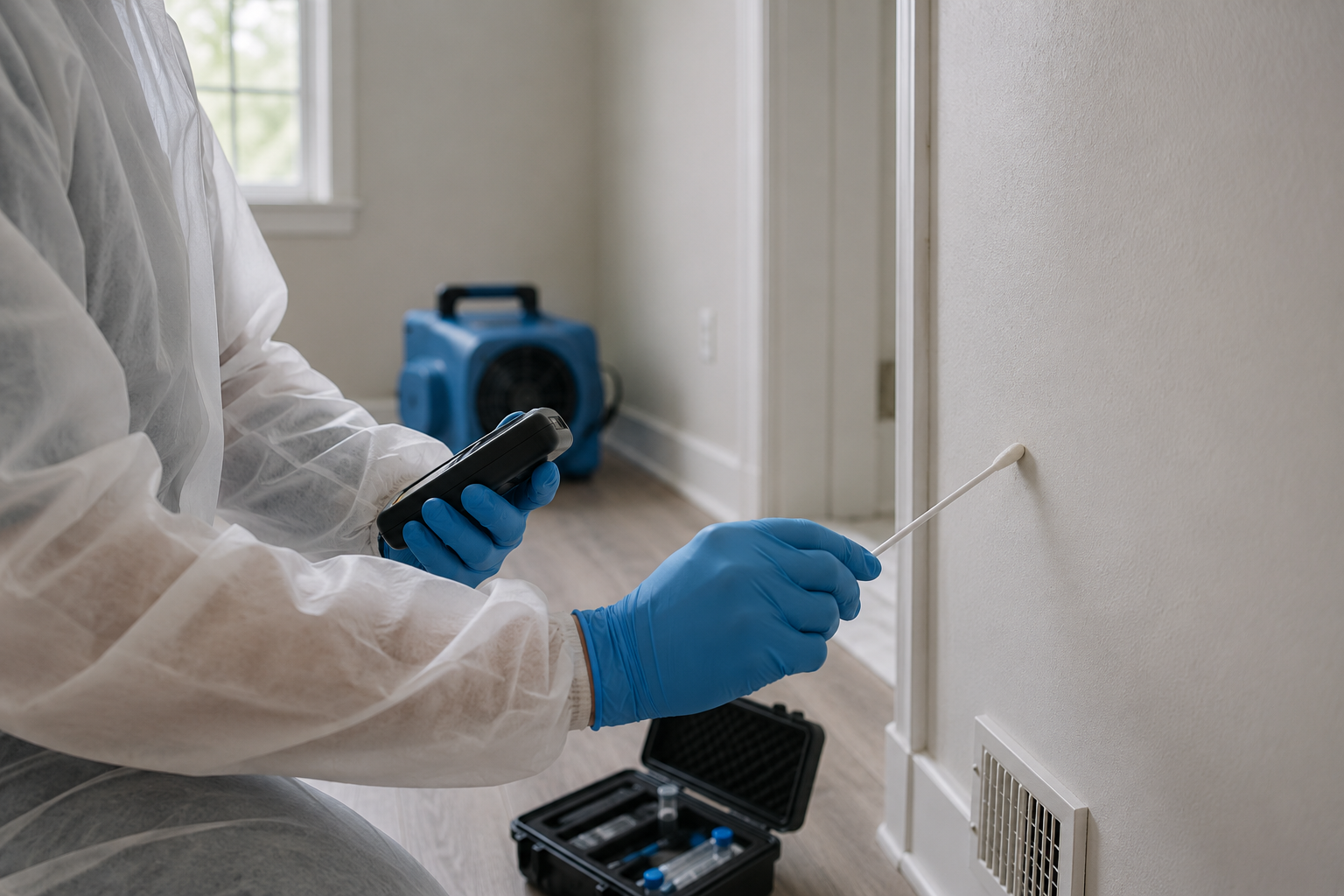
Our process is built around clear documentation, practical reporting, and licensed mold assessment experience. We evaluate site conditions, document observations, collect appropriate air or surface samples when needed, and explain the findings in plain language.
Mold assessment services are led by Texas Mold Assessment Consultant Tom Langley, License #MAC2268. Turn Key Mold and Air Quality is a DBA of Texas Turn Key Home Inspection PLLC. As our company grows, our assessment services will continue to be supported by trained personnel working within our documented inspection and sampling process.
For mold-related concerns, this page should be reviewed together with our Mold Assessment page to better understand inspection, sampling, and next-step options.
Our Indoor Air Quality Testing Services
Air Quality Sampling
Air quality sampling helps evaluate selected indoor areas for airborne mold-related indicators and other conditions that may affect the indoor environment.
Samples are collected using appropriate methods and reviewed with the site conditions observed at the time of inspection. This helps provide clearer information about what may be present in the air and whether correction, further evaluation, or professional remediation may be appropriate.
Surface Sampling
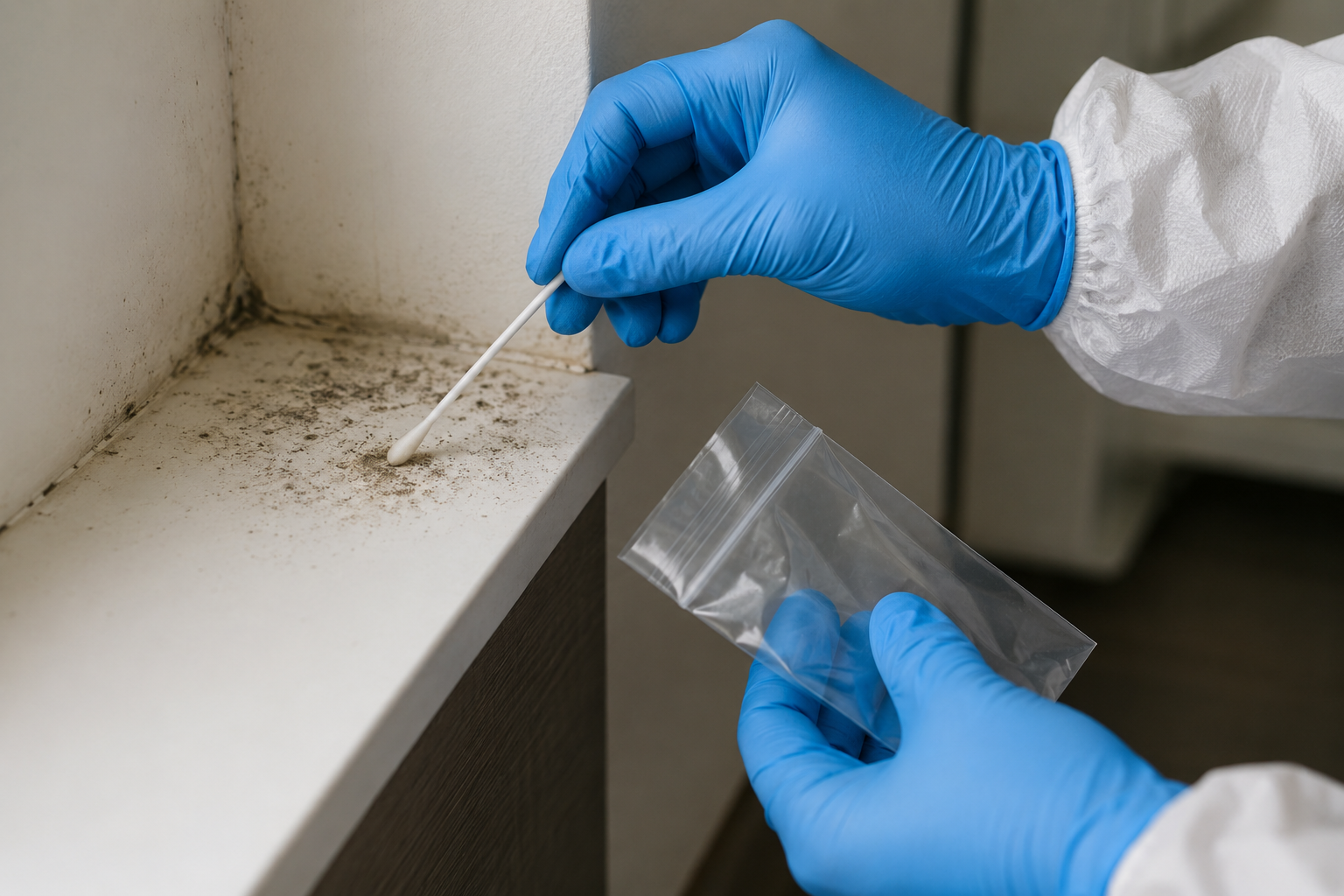
When visible staining, suspected mold growth, or unusual residue is present, surface sampling helps determine what is actually on the material.
We may collect a swab, tape lift, or other appropriate sample for laboratory analysis. The results are reviewed together with the conditions observed on site, including moisture, staining, ventilation, prior leaks, and building materials.
This gives the client clearer information about whether the area appears to need cleaning, correction, further evaluation, or professional mold remediation.
Moisture, Humidity, and Building Conditions Review
Moisture is one of the biggest factors behind indoor air quality concerns. A lab result is only part of the picture. The real value comes from understanding what conditions may be contributing to the problem.
We review humidity levels, visible water damage, condensation patterns, ventilation concerns, HVAC-related moisture issues, and building materials that may hold or hide moisture. These observations help connect the test results to real property conditions.
This gives clients a clearer understanding of what may be affecting the indoor environment and whether correction, further evaluation, or professional remediation may be appropriate.
HVAC and Ventilation Observations
Indoor air concerns are often connected to how air moves through the building. HVAC performance, filtration, return air pathways, register locations, humidity control, and ventilation limitations can all affect comfort and indoor air quality.
We observe accessible HVAC and ventilation conditions that may help explain musty odors, damp rooms, stale air, condensation, or uneven air movement. These observations are not a substitute for a full mechanical evaluation, but they provide important context when reviewing air quality concerns and laboratory results.
This helps clients better understand how the building may be contributing to the indoor air conditions they are experiencing.
Post-Remediation Verification Testing
After mold remediation or moisture correction, follow-up inspection and testing can provide important documentation before repairs are closed up or the space is returned to normal use.
We review accessible site conditions, look for remaining moisture concerns, and collect appropriate samples when needed. The findings are compared with the observed conditions and available project information to help determine whether the area appears improved or whether additional professional attention may be needed.
Post-remediation verification does not guarantee future conditions, but it gives property owners, buyers, contractors, and businesses a clearer basis for the next step.
Commercial Indoor Air Reviews
Commercial properties need indoor air quality reviews that are practical, organized, and properly documented. Offices, retail suites, rental properties, and small facilities can be affected by moisture, ventilation, HVAC performance, odors, remodeling, leaks, or occupant complaints.
We review accessible site conditions, document observations, and collect appropriate samples when needed. Our reporting helps property owners, managers, tenants, and business operators better understand the concern and make informed decisions about maintenance, correction, or further professional evaluation.
This service is especially useful when indoor air concerns may affect business operations, tenant communication, or long-term property maintenance.
Benefits of Indoor Air Quality Testing
Clearer Indoor Air Answers
Indoor air concerns should not be based on guesswork. Testing provides documented information about airborne mold-related indicators and other conditions that may be connected to moisture, ventilation, dust, filtration, or microbial activity. The results are reviewed with the conditions observed at the property, giving owners, buyers, and businesses a clearer basis for decisions about repairs, remediation, HVAC improvements, or further evaluation.
Better Moisture Awareness
Indoor air problems often begin with moisture. Testing, combined with visual assessment, helps connect air quality concerns to leaks, condensation, humidity, or ventilation problems so corrective actions address the source instead of only treating surface symptoms inside occupied buildings.
Support for Real Estate Decisions
Real estate transactions move quickly, and indoor air concerns can create uncertainty for buyers, sellers, agents, and property managers. Indoor Air Quality Testing provides documented information that can support repair negotiations, buyer concerns, seller disclosures, leasing decisions, and property management planning. Testing does not replace professional judgment, but it gives all parties a clearer basis for discussing the condition of the property and deciding the next step.
Health-Conscious Property Planning
Indoor Air Quality Testing does not diagnose health conditions or determine medical cause. It can, however, help identify indoor environmental conditions that may contribute to discomfort, odors, irritation, or ongoing occupant concerns. By evaluating airborne mold-related indicators, moisture conditions, filtration, and ventilation concerns, testing gives families and businesses better information about the spaces they occupy. This supports practical decisions about cleaning, repairs, moisture correction, HVAC improvements, or further professional evaluation.
Documentation After Water Events
After a roof leak, plumbing failure, storm event, or flooding, indoor air concerns can remain even when visible surfaces appear dry. Moisture can affect building materials, wall cavities, insulation, flooring, and HVAC-related areas long after the initial event. Indoor Air Quality Testing, combined with a site review, helps document current conditions and determine whether additional evaluation, moisture correction, or professional remediation may be appropriate. This documentation can support property owners, buyers, contractors, insurance discussions, and repair planning after moisture exposure.
Confidence Before Remediation
Before remediation begins, testing can help define the concern more accurately. After work is complete, follow-up testing may support verification efforts by comparing conditions and confirming whether professional cleanup goals appear to have been reasonably addressed indoors safely today afterward.
Turn Invisible Air Concerns Into Clear Answers
Indoor air concerns are often invisible, but they should not be ignored. Musty odors, humidity, past water intrusion, visible staining, HVAC concerns, or occupant complaints can all raise important questions about the indoor environment.
For homes, offices, rental properties, and commercial spaces in League City, Texas, Indoor Air Quality Testing provides documented information that helps clients understand what may be affecting the air inside the property.
Turn Key Home Inspection provides Indoor Air Quality Testing through Turn Key Mold and Air Quality, combining inspection experience, local building knowledge, and licensed mold assessment services into one clear process.
Our goal is not to create fear. Our goal is to provide practical information that helps property owners, buyers, businesses, and managers make informed decisions about monitoring, repair, moisture correction, remediation, or ventilation improvements.
Mold-related assessment services are performed under Texas Mold Assessment License #MAC2268, valid through May 20, 2028.
Turn Key Mold and Air Quality is a DBA of Texas Turn Key Home Inspection PLLC. We provide practical testing, clear documentation, and professional guidance for indoor air and mold-related concerns.
Frequently Asked Questions
What is Indoor Air Quality Testing?
Indoor Air Quality Testing evaluates selected indoor conditions that may affect the air inside a home or commercial property. This may include inspection observations, moisture review, HVAC and ventilation observations, and sample collection when appropriate.
The goal is to provide documented information about concerns such as mold-related indicators, moisture conditions, odors, ventilation limitations, or airborne particles so clients can better understand the next step.
When should I schedule Indoor Air Quality Testing?
Indoor Air Quality Testing may be appropriate after roof leaks, plumbing leaks, flooding, musty odors, visible staining, elevated humidity, HVAC concerns, or mold remediation work.
Testing can also be helpful when certain rooms feel damp, stale, poorly ventilated, or uncomfortable without an obvious cause. For real estate transactions, testing may provide useful documentation before closing, leasing, repair negotiations, or remediation decisions.
Is Indoor Air Quality Testing the same as a mold assessment?
They are related, but they are not always the same service.
Indoor Air Quality Testing may evaluate broader indoor air concerns, including airborne particles, odors, ventilation issues, humidity, and possible mold-related indicators. A mold assessment is more focused on mold-related conditions, moisture sources, affected materials, and whether additional mold-related action may be needed.
When mold-related assessment work applies, services are performed under a valid Texas Mold Assessment Consultant license.
Do you provide licensed mold assessment work?
Yes. Turn Key Home Inspection provides mold-related assessment services through Turn Key Mold and Air Quality.
Mold assessment work is performed under Texas Mold Assessment License #MAC2268, valid through May 20, 2028. This gives clients in League City and the surrounding Bay Area access to properly licensed mold assessment services with clear documentation and professional guidance.
Can testing find hidden mold?
Testing can help identify airborne mold-related indicators and conditions that may suggest a hidden moisture or mold concern. However, no air test can locate every concealed area or confirm what is behind walls, under flooring, or inside building cavities without additional evaluation.
The strongest results come from combining testing with moisture readings, site observations, property history, visible staining, odor concerns, and targeted inspection methods. When hidden mold is suspected, further evaluation may be recommended.
The strongest results come from combining testing with moisture readings, site observations, property history, visible staining, odor concerns, and targeted inspection methods. When hidden mold is suspected, further evaluation may be recommended.
How long does the process take?
The time needed depends on the size of the property, the number of areas reviewed, the number of samples collected, and the conditions observed on site.
Many Indoor Air Quality Testing appointments can be completed during a single visit. After the inspection and sampling are complete, findings are explained clearly, and laboratory results are reviewed once available so clients understand what the information means and what next steps may be appropriate.
Can Indoor Air Quality Testing help after remediation?
Yes. Indoor Air Quality Testing can provide useful documentation after mold remediation, cleanup, or moisture correction.
Post-remediation testing helps compare current conditions with the work performed and the conditions observed on site. It can help determine whether the area appears improved, whether additional concerns remain, or whether further professional attention may be appropriate before the space is returned to normal use.
Who performs the testing in League City, Texas?
Indoor Air Quality Testing is provided by Turn Key Home Inspection through Turn Key Mold and Air Quality, serving League City and the surrounding Bay Area.
Testing is performed with inspection-based documentation, local moisture awareness, and practical reporting. When mold-related assessment work applies, services are performed under Texas Mold Assessment License #MAC2268.
What our customers have to say...
Testimonials